

0 views
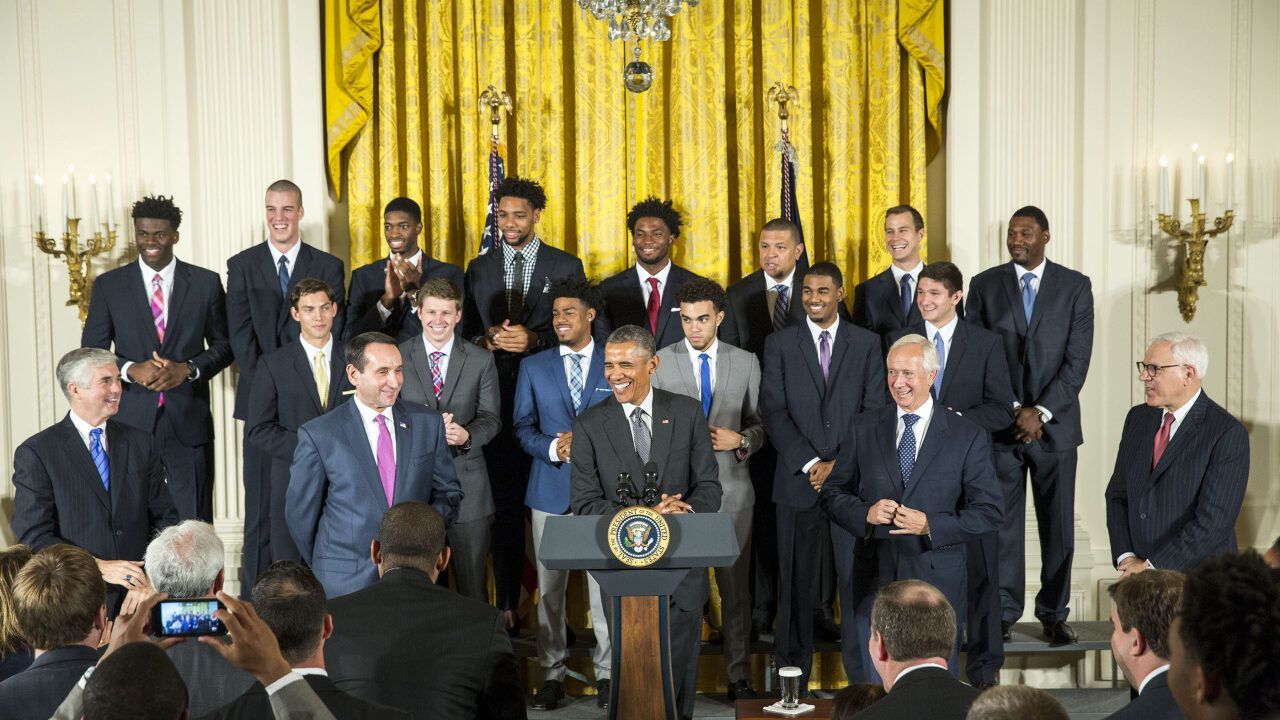
President Donald Trump presented the National Medals of Science and of Technology and Innovation at the White House on Thursday, honouring a group of technology and science leaders that included Elon Musk, Google co-founder Sergey Brin, Nvidia chief Jensen Huang and Advanced Micro Devices chief Lisa Su at a summit titled "Science: A New Golden Age."
The ceremony marked the first time Trump himself has presented either medal, among the highest honours the United States bestows for scientific and technological achievement. Michael Dell and Microsoft chief Satya Nadella were honoured with the National Medal of Technology and Innovation, while the science medal recognised contributions spanning computing, physics and engineering.
The guest list doubled as a snapshot of the administration's technology agenda. Musk, whose companies span electric vehicles, rockets and artificial intelligence, joined Brin, whose work helped build modern search, and Huang, whose chips power much of the world's AI computing. Su leads one of Nvidia's principal rivals in advanced processors. Dell and Nadella anchor two of the largest enterprise technology businesses in the country.
Reporting on the event noted a striking detail: five of the six honourees celebrated on stage were immigrants to the United States, a fact that sat alongside the administration's hard line on immigration and its push to tie scientific leadership to national competitiveness. The White House framed the medals within a broader argument that American science is entering a new golden age driven by AI, private spaceflight and advanced manufacturing.
The National Medal of Science was established in 1959 and is administered for the president by the National Science Foundation; the technology medal followed in 1980. Recipients are selected for outstanding contributions to knowledge, industry and the public good. Past technology laureates include the founders of companies that defined the personal computer and internet eras.
Thursday's summit brought administration officials together with researchers and executives to discuss research funding, AI infrastructure and the race with China in advanced computing. The presence of rival chip executives on the same honours list underscored how central semiconductors have become to economic and security policy.
For the honourees, the medals cap careers that remade industries: Brin's search research became Google; Huang bet Nvidia on graphics processors that turned out to be ideal for AI; Su led AMD's turnaround into a data-centre power; Dell built a direct-sales model that reshaped PC retail; Nadella reoriented Microsoft around cloud computing and AI partnerships; Musk pushed electric cars and reusable rockets into the mainstream simultaneously.
The event also carried political symbolism. Trump has sought close ties with technology executives while pressing them on manufacturing, export controls and content policy. Awarding the nation's top science and technology medals to the sector's most prominent figures — most of them born abroad — gives the administration a showcase for its argument that the United States remains the world's magnet for talent and invention.
The medals' history gives the ceremony its weight. The science medal has honoured figures from Vannevar Bush to the architects of the internet age; the technology medal's roll includes pioneers of computing, biotechnology and semiconductors. Recipients are nominated through a public process and vetted by committees of scientists and engineers — which is why administrations treat the ceremony as a claim about national direction rather than a campaign event.
This year's summit format pushed further in that direction, wrapping the honours in a policy programme for the administration's science agenda. Officials used the occasion to argue for expanded research investment channelled through industry, faster permitting for AI infrastructure, and export policies that keep advanced chips in allied hands. The honourees — several of whom lead companies directly affected by each of those policies — listened from the front row.
Critics will note the fusion of honour and agenda. Supporters will answer that American science medals have always been statecraft: a republic decorating the people it believes are building its future. With artificial intelligence now treated in Washington as the decisive technology of the century, the men who build its chips, models and platforms were the only plausible guest list. That five of the six were born abroad, and immigrated to the country that just decorated them, is either the contradiction of the moment or its entire point.
Related reading: US Green-Card Freeze Pushes Tech Giants to Rethink Where Talent Lives · Student-Led Protests Sweep France as Government Seeks a Way Out · Trump Rules Out New Iran Strikes Before November Midterms