

0 views
Three NASA SmallSats hitched a ride to orbit aboard SpaceX’s Transporter-18 mission to test new propulsion, ultraviolet astronomy and satellite-inspection technologies.
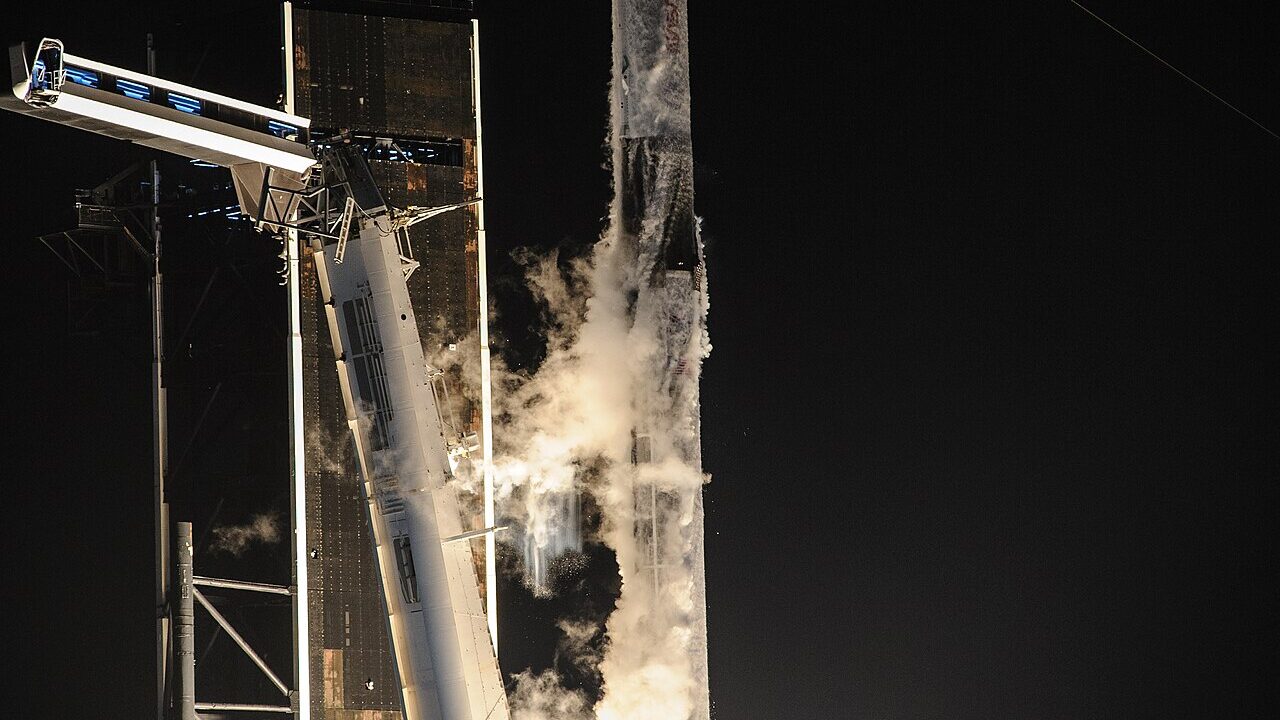
The spacecraft launched on October 1 at 11:32 a.m. Pacific time from Vandenberg Space Force Base in California, according to the space agency.
The missions include ASCENT, which is testing a dual-mode propulsion system; SPRITE, an ultraviolet astronomy observatory; and SSPICY, designed to demonstrate close-up inspection of other satellites.
Small satellites have become one of NASA’s most cost-effective tools, allowing the agency to trial risky new technologies without betting a flagship mission.
Engineers will spend the coming months commissioning the spacecraft and beginning the science and technology demonstrations they were built for.
Rideshare launches like Transporter-18 have transformed access to space. By splitting the cost of a Falcon 9 among dozens of payloads, even university teams and small companies can now fly hardware that once required a dedicated rocket.
ASCENT’s propulsion experiment is particularly closely watched: a thruster that can switch between efficient and high-power modes could give future small satellites far more maneuverability.
SPRITE, meanwhile, will stare at the universe in ultraviolet light — a wavelength blocked by Earth’s atmosphere and best observed from orbit. Its compact design could pave the way for a new generation of small space telescopes.
SSPICY’s inspection demonstration has defense as well as scientific interest: the ability to approach and photograph another satellite is a capability several nations are developing, for maintenance — and potentially for less benign purposes.
All three spacecraft will beam their results back over the coming year. If the demonstrations succeed, the technologies could graduate to larger missions — proof, once again, that small satellites can carry big ideas.
For students and space fans, the mission offers something else: a reminder that the path to orbit no longer runs only through giant government programs. Sometimes it starts with a box the size of a microwave, catching a ride on someone else’s rocket.