

0 views
India used a United Nations debate on counter-terrorism this week to accuse Pakistan of double standards, pointing to Islamabad's announcement of an increased reward for information on Jaish-e-Mohammed chief Masood Azhar and asking why a state that claims ignorance of his whereabouts appears able to reach him through its own media.
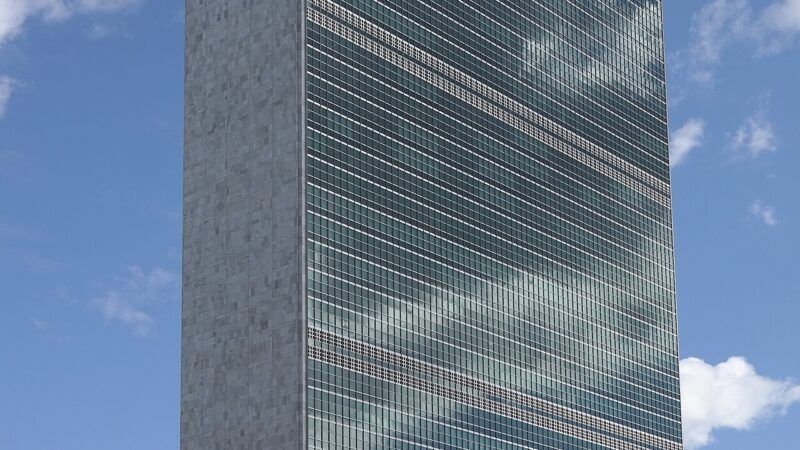
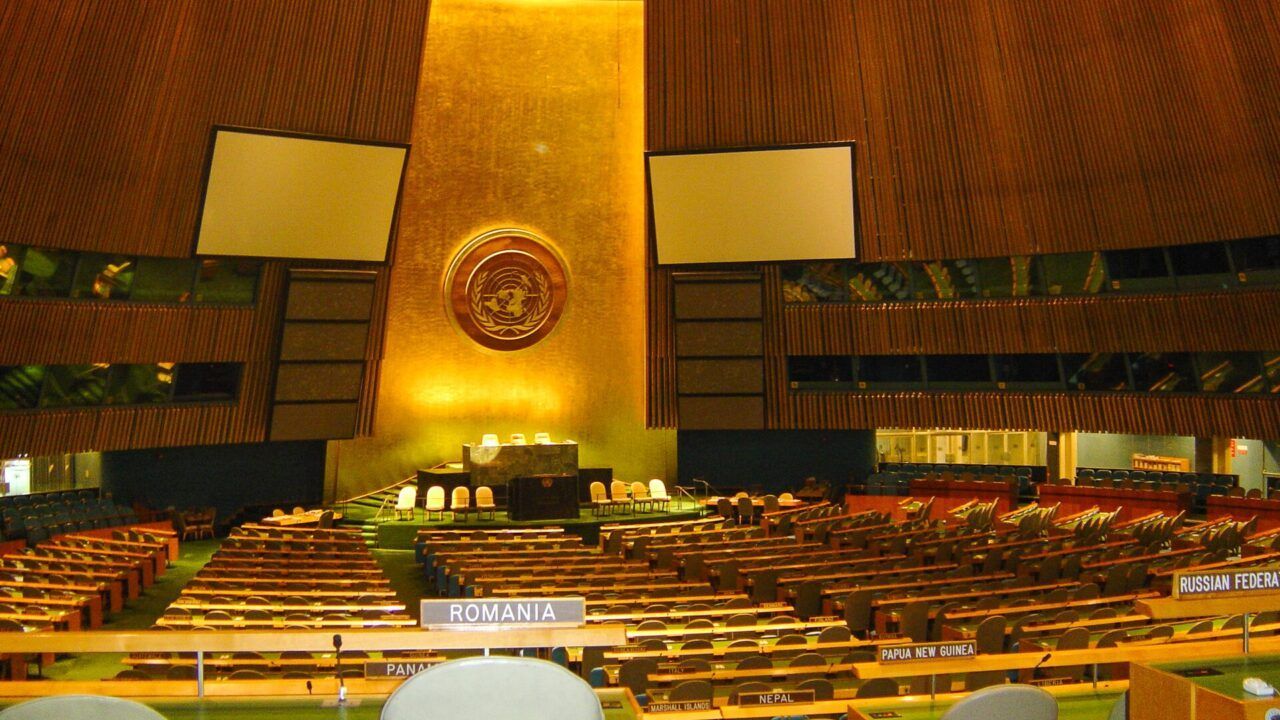
Exercising its right of reply in the Sixth Committee of the UN General Assembly, India's First Secretary Raghoo Puri argued that terrorism cannot be defeated by declarations and demanded action against perpetrators, organisers, financiers and sponsors. He questioned how Pakistan can present itself as a frontline state against terrorism while, in India's telling, glossing over its own record.
The Indian envoy noted that Pakistan had recently raised the reward for Azhar — a UN-listed terrorist blamed for multiple attacks on India — from 50 lakh to 70 lakh Pakistani rupees. He called the announcement a gimmick, arguing that if Pakistani journalists can contact Azhar and obtain his comments on military operations, the Pakistani state surely knows where he is.
Puri also rejected Pakistan's suggestion that Azhar is hiding in Afghanistan, noting that the Taliban authorities have denied the claim, and pointed out that Pakistani representatives had themselves described Jaish-e-Mohammed as defunct only months earlier. The shifting descriptions, he argued, show a pattern of narrative management rather than enforcement.
In his remarks, Puri recalled the 9/11 attacks, the 26/11 Mumbai attacks and the more recent Pahalgam attack, and reminded the committee that al-Qaeda founder Osama bin Laden was found living in Abbottabad, Pakistan. He characterised the militant groups Pakistan once cultivated as a monster that has turned on its creator, citing attacks inside Pakistan itself.
India's intervention came in response to a statement by Pakistan's representative in the committee debate on measures to eliminate international terrorism. In a second right of reply, Puri accused Islamabad of recycling the same arguments year after year instead of acting, saying that if the effort spent on narrative-building went into counter-terrorism, the world would be safer.
The exchange is the latest in a long-running diplomatic battle between the two nuclear-armed neighbours, whose relations have remained frozen through repeated crises. India maintains that dialogue cannot proceed while cross-border terrorism continues; Pakistan denies supporting militant groups and accuses India of human rights abuses in Kashmir.
UN counter-terrorism debates rarely change positions on the ground, but both countries treat them as important signalling exercises for the wider membership. Diplomats say India's focus this year — the Azhar reward and the contradiction between Pakistan's claims and its public record — was aimed at keeping international attention on enforcement rather than statements.
Pakistan had not issued a detailed public response to the specific allegations at the time of reporting. The committee's debate continues this month as member states negotiate updated language on international counter-terrorism cooperation.
The Azhar file is the sharpest available illustration of India's argument, which is why it anchored the intervention. Azhar, whose Jaish-e-Mohammed is a UN-designated terrorist organisation, has been the object of a diplomatic tug-of-war for decades — including years in which China blocked his formal UN listing at Pakistan's behest while attacks attributed to his group continued. For India to note that Pakistan now advertises a price for the same man's capture, while Pakistani media interview him, compresses the entire dispute into a single contradiction.
Western diplomats generally treat the annual India-Pakistan exchange as ritual, but rituals have audiences. The Sixth Committee's terrorism debate feeds the UN's counter-terrorism architecture — sanctions committees, listing decisions, technical-assistance priorities — where India's objective is to keep state sponsorship at the centre of the agenda and Pakistan's is to redirect attention to Kashmir and self-determination.
Neither capital will declare victory in terms the other recognises. But the scoreboard New Delhi plays for is visible in the listing regimes and financial-action grey lists where these arguments accumulate. On that scoreboard, a Pakistani bounty on Azhar is, for India, less a concession than an exhibit.
Related reading: Gaza's Children Go Back to School — in Tents, After Three Years · Riyadh Airport Attack Kills Saudia Captain, Destroys Parked Jet · Navi Pillay Wins 2026 Nobel Peace Prize for Defending International Law